

In recent years, the issue of legalizing crypto assets and exchanging them for fiat currency has become extremely relevant, especially for Ukrainians making large purchases in the European Union. Xpaid, a company founded by Oleksii Rudem, offers licensed financial services in the EU that allow such transactions to be structured within the legal framework.
Xpaid is a financial company with three crypto licenses in the EU that operates as an OTC Desk (Over-the-Counter), specializing in bespoke, large-volume cryptocurrency exchange.
How does legal exchange work – the EU-Ukraine link
Xpaid, licensed in Lithuania, acts as a company that provides crypto wallets and can exchange cryptocurrency for fiat funds. For the exchange, Xpaid uses a connection with a European payment system that is friendly to Ukrainians and crypto.
Since the company only works with cryptocurrency (primarily USDT), the client’s initial fiat funds (cash or bank assets) must first be converted into crypto.
The whole exchange process, from crypto to euros in a newly created European account, happens quite quickly – within a few hours of receiving the crypto.
5 Key Stages of Exchange
1. Know Your Customer (KYC)
The client is undergoing a standard verification process to ensure they are not a politically exposed person, terrorist, or listed in any databases. This is done quickly, and the client is onboarded into the xpate system within minutes.
2. Opening an account in the EU
Xpaid helps clients open an account with a payment partner (for example, in the jurisdiction of Lithuania, Malta, Switzerland, or Britain). This process can take up to a week, as the payment partner’s team thoroughly reviews everything.
3. Structuring the deal and confirming the source of funds
The client is providing proof of income. These documents are required for both Xpate and the European payment system.
4. Signing documents
A contract for exchange is signed and an invoice with the specific exchange amount is issued.
5. AML wallet check
An automatic check is being conducted on the wallet from which the cryptocurrency is being sent. If the wallet is not an exchange wallet (decentralized), it is checked whether the crypto has been received from suspicious transactions. If the percentage of suspicious transactions is too high, the company will not accept the funds.
Cases – from selling an apartment to trading
The company Xpaid has learned to work with various scenarios of fund origin, legalizing them in Europe.
Case 1: Svitlana (Real Estate Sales)
If the client, Svitlana, sold an apartment in Kyiv for $250,000 in cash and wants to buy property in Poznań, the main thing is to confirm the origin of the fiat funds.
Confirmation
A notarized apartment sale and purchase agreement is sufficient. The document must be translated into English (not necessarily notarized).
• Crypto and the unregulated field
Since cryptocurrency in Ukraine is unregulated, Xpaid does not require detailed confirmation of how the hryvnia was converted into crypto (USDT). They a priori equate crypto in Ukraine with the hryvnia in terms of origin, if there is confirmation of the origin of the hryvnia/fiat.
After the exchange, the funds are deposited into a newly created European account with a full IBAN. If the funds from this account are transferred to a Polish bank (e.g., for real estate payment), they go through the SEPA system as “own Money Transfer,” and Polish banks typically do not ask for anything extra.
Case 2: Miguel (Crypto Income)
If a client has earned funds from crypto (e.g., trading or mining) and wants to buy property in Spain, confirmation from the “digital world” is sufficient for the company and payment provider.
Trading
Information that the client deposited 10,000 USDT and withdrew 500,000 USDT (trading history) may be relevant.
Mining
Clients can provide information about equipment and addresses where commissions were issued.
Miguel is a client, even if his funds are honestly earned in the digital world. However, Xpaid emphasizes that Miguel must independently structure his tax history and pay taxes on income derived from crypto activities in his tax residency jurisdiction.
For large sums, partners can be offered to help optimize the tax path, for example, by setting up a company in a low-tax cryptocurrency jurisdiction.
Watch on the podcast:
Markets in Crypto-Assets Regulation (MiCA)
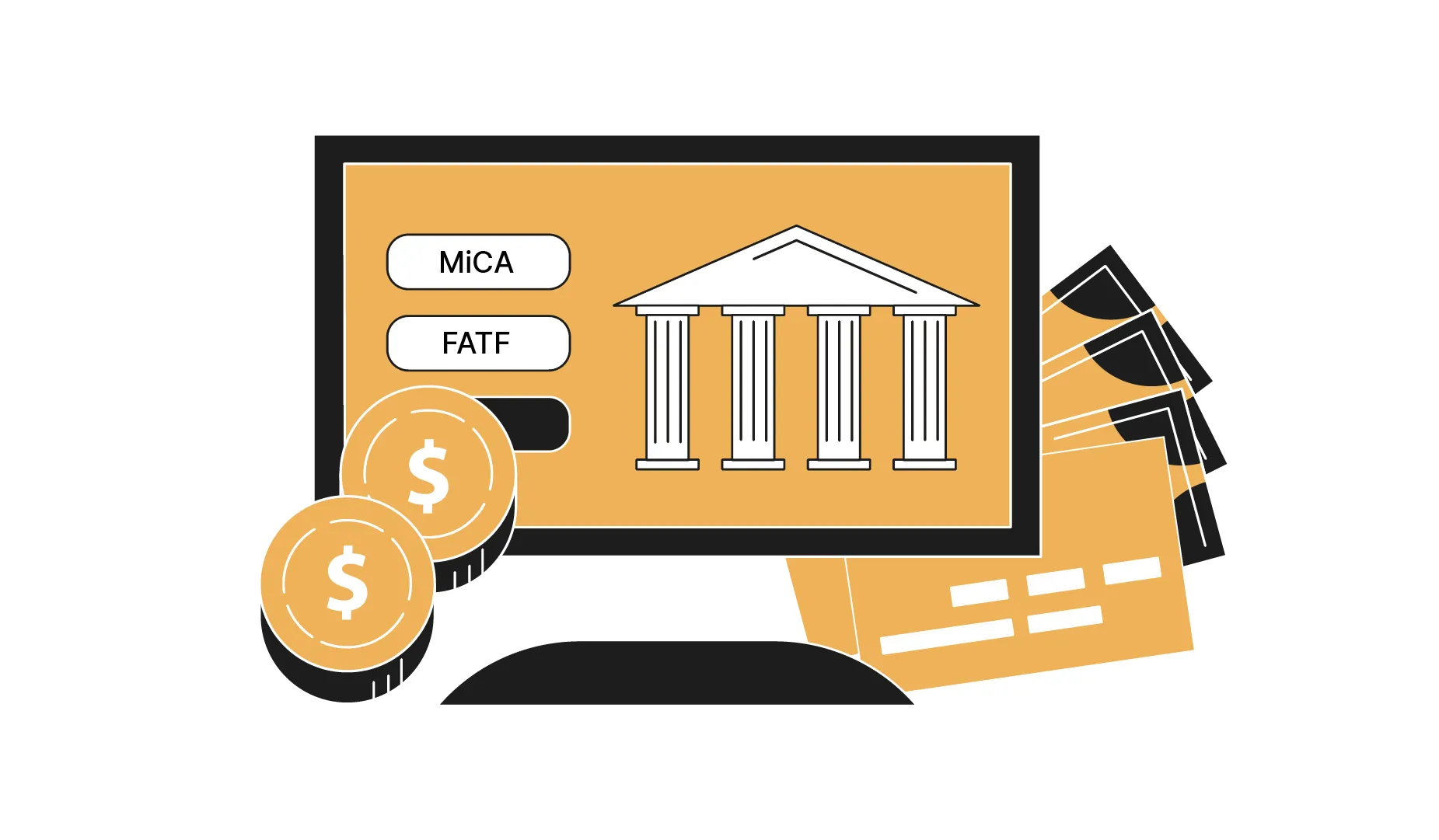
The introduction of MiCA (Markets in Crypto Assets) legislation will have the greatest impact on crypto operations in the EU. MiCA will begin to heavily regulate the entire crypto sector and will significantly limit various opportunities.
Complication of processes
It is expected that in a maximum of six months, current exchange processes will become easier. After that, confirming the origin of cryptocurrency will become more difficult.
• Restrictions for non-residents
There is a trend that some payment systems may stop accepting Ukrainian passports and will require European residency to open accounts.
That is why the company recommends that Ukrainians planning to use these services do so as soon as possible.
Other areas of activity
In addition to OTC trading, xpate and its partner companies are actively developing other financial areas:
• Launch of financial licenses
Assistance in launching crypto licenses or financial licenses (PSP, EMI, API) in Europe, particularly in Poland, which is popular due to its simple and inexpensive conditions.
Mergers and Acquisitions
They conduct transactions for the sale or purchase of financial licenses.
• Neobank Constructor
Assistance with launching neo-cryptobanks (jurisdiction selection, provider connections).
Card Module (White Label)
Assisting existing businesses in launching their own cards (branded cards that can be topped up with crypto and used for payments). This allows businesses to build loyalty programs and further monetize their customer base.
FAQ: How to buy real estate in the EU with cryptocurrency without account freezing
How does Xpaid's crypto-to-EUR conversion process work?
Xpaid uses a regulated three-step conversion route: your crypto assets (BTC, ETH, USDT, or other supported tokens) are first exchanged for USDC stablecoin at the current market rate, then converted to EUR and sent directly to your EU bank account. Each step is governed by a formal asset purchase agreement — making this a legally documented financial transaction, not just a simple swap.