

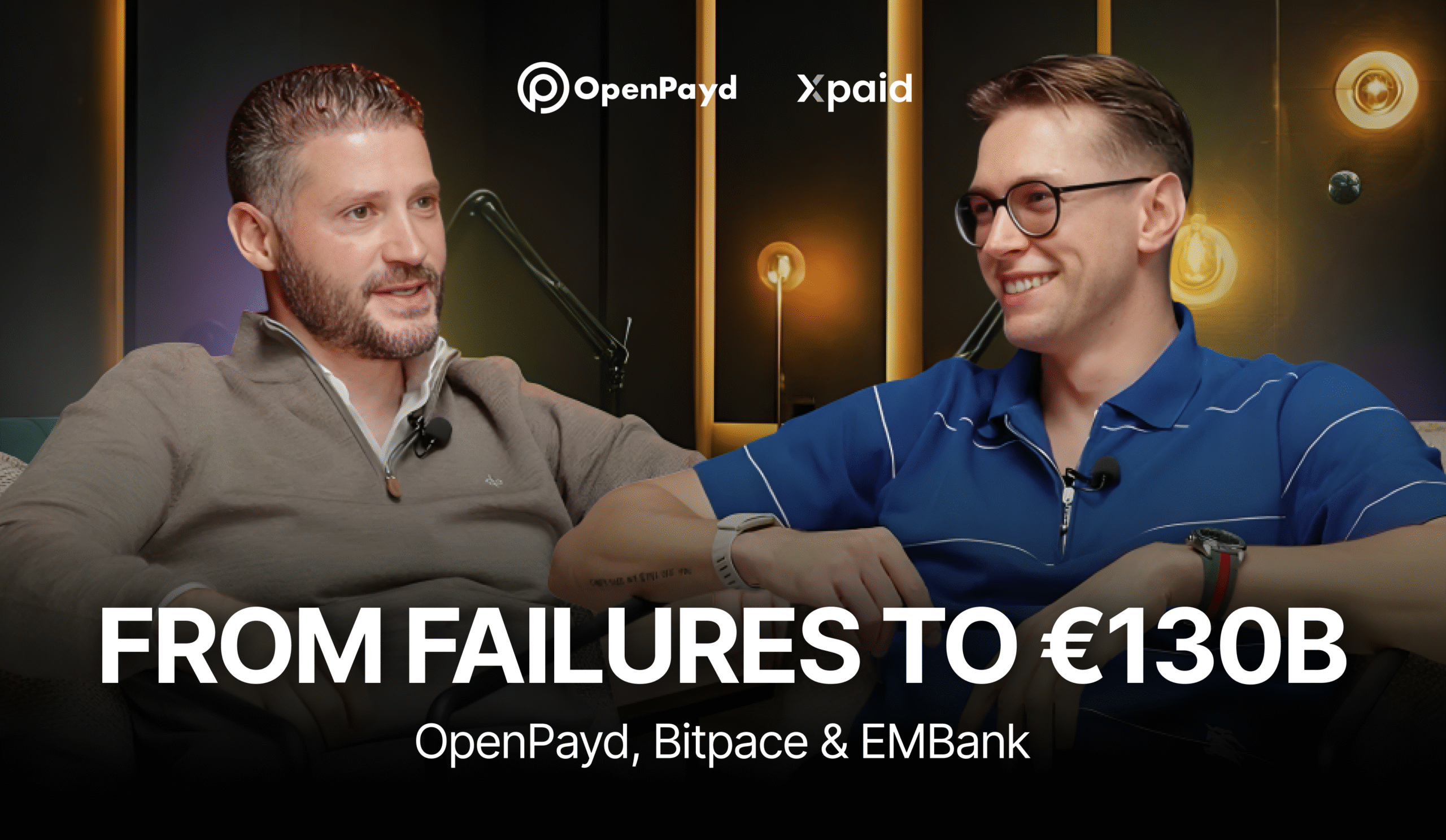
When most people think about building a bank, they imagine decades of tradition, cautious growth, and heavy bureaucracy. Today, OpenPayd is not only redefining the future of financial services but also processing over €130 billion every year. But what really lies behind this success?
In our latest podcast, Alex Rud CEO of Xpaidspoke with Dr. Ozan Ozerk (founder of OpenPayd, Bitpace, and EMBank): uncovering the principles behind the success, the strategic approach that drives growth, and the values shaping their vision for the future of financial solutions.
Key Takeaways from the Podcast:
- Failure before success. How early mistakes became the foundation for OpenPayd’s success.
- The first customers: Winning trust in a world where credibility is everything.
- Why taking the “biggest risk” was the only path forward.
- The turning point: The single decision that gave OpenPayd its strongest push for growth.
- Beating competitors: How innovation and agility helped outperform traditional players.
- How Özerk transitioned from being a doctor to launching startups in social media, e-commerce, and payments.
- The origins of OpenPayd and why regulation, licensing, and compliance became central to its strategy.
- Bitpace's launch and the challenges of bridging crypto and traditional finance.
- Why fintech must complement, not replace banks, and how cooperation creates opportunities.
- Here are my thoughts on competition, ego, stress management, and the reality of being a founder:
**Competition:** Competition is a double-edged sword. On one hand, it can be a powerful motivator, pushing you to innovate, improve, and be the best. It forces you to understand your market deeply and identify your unique value proposition. However, unhealthy competition, where the focus is solely on beating others rather than delivering value, can lead to burnout and a loss of focus on your core mission. It's important to compete by drawing inspiration from others, learning from their successes and failures, and consistently striving to be better, not just by aiming to be "not them."
**Ego:** Ego can be both a driver and a detractor for founders. A healthy ego can provide the confidence needed to take risks, persevere through setbacks, and believe in your vision when others doubt. It fuels the conviction that you can build something meaningful. However, an inflated ego can be your downfall. It can lead to an unwillingness to listen to feedback, a belief that you're infallible, and an inability to admit mistakes. It can also make you risk-averse in the wrong ways – afraid to pivot or change direction because it might be seen as a sign of failure. The key is to have the confidence to act but the humility to learn and adapt.
**Stress Management:** This is arguably one of the most critical skills for a founder, and often one of the most neglected. The founder journey is a marathon, not a sprint, and it's filled with immense pressure, uncertainty, and long hours. Without effective stress management, burnout is almost inevitable. This involves:
* **Setting Boundaries:** While passion is important, knowing when to switch off, even for short periods, is crucial for long-term sustainability.
* **Building a Support System:** Lean on co-founders, mentors, advisors, friends, and family. You can't do it all alone.
* **Prioritizing Well-being:** This includes adequate sleep, exercise, healthy eating, and activities that bring you joy and allow you to recharge.
* **Developing Coping Mechanisms:** Whether it's meditation, journaling, hobbies, or simply taking a walk, find what works for you to decompress.
* **Accepting Imperfection:** Not everything will go according to plan. Learning to manage the emotional fallout of setbacks is vital.
**The Reality of Being a Founder:** The romanticized image of the "rockstar founder" is largely a myth. The reality is often a grind that is:
* **All-Consuming:** Your business becomes a significant part of your identity and your life. You'll be thinking about it constantly, often at the expense of other areas.
* **Unpredictable:** You'll face constant change, unforeseen challenges, and moments of extreme uncertainty. Planning is essential, but so is the ability to adapt on the fly.
* **Lonely:** Despite having a team, the ultimate responsibility and the weight of major decisions often fall on your shoulders, which can be isolating.
* **Demanding:** It requires an immense amount of hard work, resilience, and learning. You'll wear many hats and constantly be outside your comfort zone.
* **Rewarding (Potentially):** When things go right, the sense of accomplishment, the impact you can create, and the opportunity to build something from scratch are incredibly fulfilling. However, this reward often comes at a significant personal cost and with no guarantee of success.
In essence, being a founder is a test of character. It requires a delicate balance of ambition and humility, strategy and adaptability, and a deep understanding of oneself to navigate the intense pressures and fulfill the demanding, yet potentially rewarding, journey.
- The future of embedded finance and OpenPayd's expansion.
Watch the full interview on YouTube